
Name a book about declutter, minimizing, purging, organizing, or tidying, and I have more than likely read it. If I had spent the time actually decluttering versus reading, you might be thinking that I could have been more productive, and you’d be right.
I didn’t grow up in a pristine house, and I married a military servicemember. Our expectations and habits couldn’t have been more different. And a lot of conflict has arisen over the years, leading me to try to change my habits and consulting books written by neutral, third parties in an attempt to address our differences and generally improve our quality of life.
If you’re struggling with decluttering, what I’ve learned is that you have to find a method that works for you. This sounds obvious, but it’s worth saying with the recent rise to fame of Marie Kondo. And to add to that, one method may work better in some areas than others.
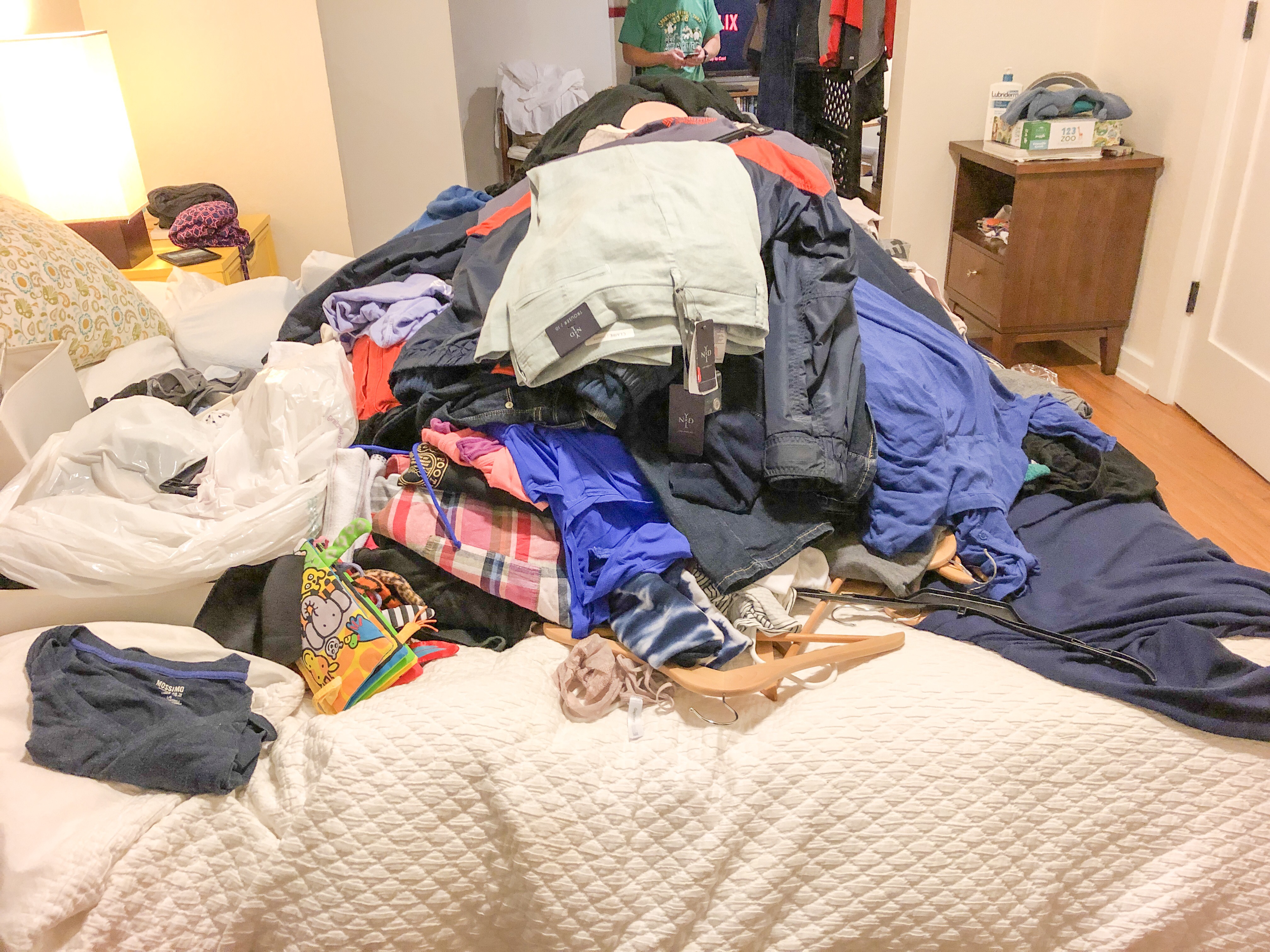
Last January, before I returned to work after our second was born, I spent two full days on my closet. I dumped everything from it (see photo) and the secondary wardrobe (Yep, TWO closets in our small house were filled with my clothes!) on our bed and started sorting through it. If you’ve had a baby, you know that clothing can amass. Quickly. Your body stretches to fit a human, and the first time my body stretched more than I expected it to because I wasn’t nor could have been very active. Then between babies, I became pretty fit but never really edited my closet. Lose x inches and I’d Target pick up a new pair of jeans. I literally had 6-7 sizes of pants that had accumulated over the years!
Kondo’s famous book, “The Life-Changing Magic of Tidying Up” focuses on carefully arranging, folding, sorting, touching, and connecting with each item that you own. My husband started organizing his closet using the KonMari method about 7 years ago and never looked back. And even though I loved the Shinto vibe, back then her process didn’t click with me. Now—for my closet anyway—it does. The main difference? We have had two kids in less than two years in a California-sized house. In 1300 square feet, you have to be judicious with your space, and kids can bring a lot of stuff along with them. (They don’t have to, and if they do, you can organize—two posts for another day!) Before our children were born, I couldn’t be bothered to fold every piece of clothing a certain way, and it’s not in my nature to be that tidy. I’m trying though.
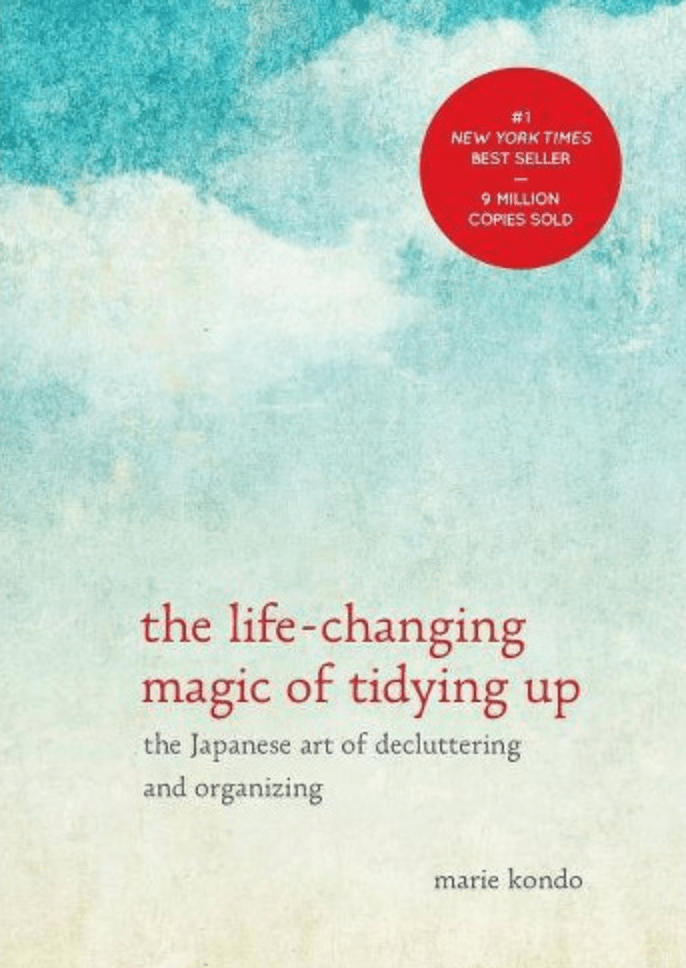
The Konmari method, in a nutshell, recommends that you:
- Tidy all at once
- Visualize the item’s destination
- Determine if it “sparks joy”
- Tidy by category of items, not their location
- Tidy in this order: Clothes, Books, Papers, Miscellaneous, and Sentimental
Numbers 1 (overwhelming), 2 (I’m not that organized), and 5 (I need more time!) made following this process very difficult for me, though I did really connect with 3 and 4. I am a sentimental person by nature, and when I am pregnant or nursing, not much can get in the way of my hormones, so the “spark joy” component of Konmari spoke to me. Way too loudly. Too much was sparking joy with me, and in a flash, I remembered a book I had read years before. Enter Kathi Lipp!
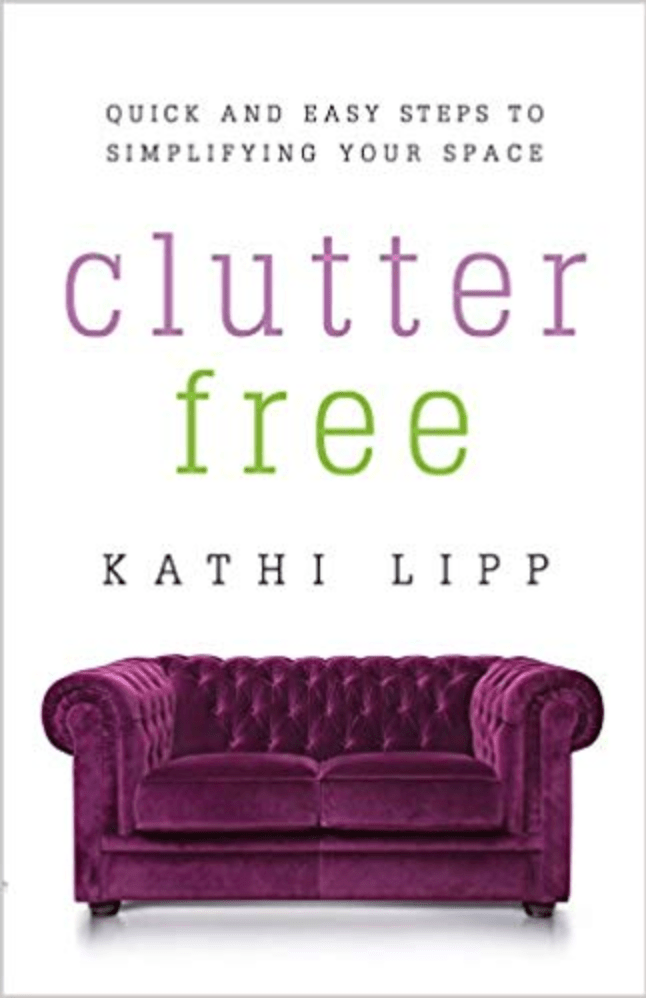
I had read Kathi’s short book via Kindle, and in it, she has a nugget that had apparently never left me (on page 126 if you buy the book, which you should since you’d be supporting a San Jose-based author and active blogger):
- “Do I currently use it?
- Do I really love it?
- Would I buy it again?”
For my tired mom brain, I shorten this to, “Use it, love it, buy again?”
This became my mantra! I can return to it even when I’m shopping—which I do impulsively sometimes—to make myself stop and really think about what I’m bringing into our house, FULLY aware of the time and effort it can take to then get it out later.
This mantra can be a little harder to apply to clothes, especially for us who have had the privilege to grow babies. For one, the clothing industry is a BEAST. It pumps out new colors, styles and iterations of everything very frequently to keep things fresh and provide our highly-connected world constant new visual fodder. I would recommend getting some classic, basic pieces that you can wear through multiple stages of being a mom. This will force you to embrace your body and its amazing ability to change and is more sustainably-minded to boot. Secondly, this mantra can be hard because of how quickly our bodies change. One day, you’re 40 weeks pregnant, and after weeks of sleeplessness and sweet snuggles, time can fly by, and the next thing you know, you’re staring at a closet with clothes that only halfway fit. You know that your body will change again, but you’ve got to get control of your closet before you go back to work!
This is where Lipp’s method really helped me: even if I had a pair of slacks or a blouse that didn’t fit, if I loved then AND knew that I would buy them again, I kept them. If I knew that I wouldn’t, I would thank the item for their purpose and let them go. This act was especially important for me letting go of maternity clothes since pregnancy was such a special time in my life.
With Lipp and Kondo in mind, I also wanted to employ intentionality while sorting so that in the chaotic mornings of trying to care for our elderly dog and two tiny kids and get ourselves ready for the day, I knew that I could easily access outfits that could maybe disguise said chaos. My mother, a retiree who has since made practically a full-time job of visiting her children and grandchildren, had embraced a capsule wardrobe a year before this, and I decided to keep that in mind.
Once I culled down my wardrobe, which I’ll repeat, took two full days and the assistance of my mom and husband with the kids, I then started reviewing what was left and actually piecing together some outfits. Here’s where a capsule wardrobe method can come in handy. If you’re a visual person like me, this guide may help you.
Those black tights that I had in the donate bag? Well, I remembered that for work in the fall, I actually wear them quite often as a way to bridge the strange NorCal spikes in our 80-degree days and 45-degree mornings. I can throw a pair of black tights under a dress, add a light jacket not freeze and then remove the jacket and not roast by lunch time. [Plus—working lady tip—dresses save time and effort. You can choose one piece instead of two (pants/shirt), throw it on, and people generally think you’ve put in more effort. *Shrug*.] So, I pulled some basics out of the donate bag that really have become weather essentials, and added them back in the capsule mentality. That J. Crew black lightweight merino wool sweater? You’re back in, buddy. You’re going to go over my favorite Anthropologie silk tank to transition me from summer to fall.
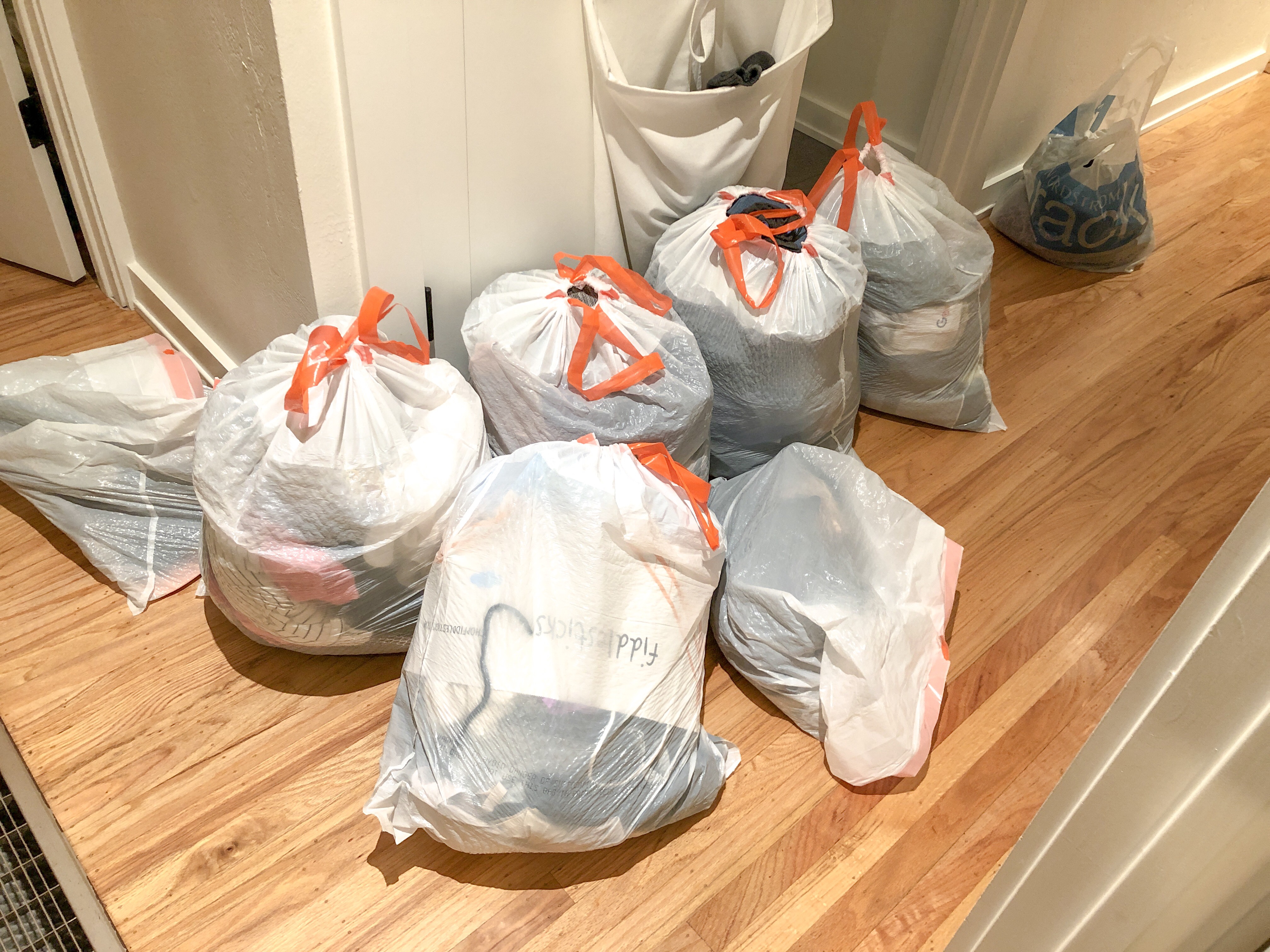
After figuring out a few more pairings, I returned to Kondo’s method of actually placing the clothes into their home. My husband had been refolding his clothes for years, and I finally understood and respected this process. The air in and around my closet felt different—more breathable, lighter, less stagnant—than it did before.
To address the sentimentality, I also set aside clothes that I thought would be worthy of further use and that specific friends could enjoy. I didn’t drop off a garbage bag full of clothes on a doorstep. I carefully folded and placed into nice bags clothing that they had approved of after texting them photos and links of the item. I tried to pass on my love of an item to an interested friend. This helped me feel like I am respecting my own nostalgia while also respecting my friends and the item.
I hope Lipp, Kondo, and capsuling can help you like they did me to totally overhaul your closet and make it easier for you to grab an outfit in the morning madness of making it out the door to get where you’re going. As a working mom, there’s no better feeling than leaving the house dressed and fed, making it to work, and receiving a compliment on your outfit. After a lot of time, effort, and intention, believe me when I say that it is well-received and truly magical.
 The Life So Valley